



How to Choose the Right Bulk Bags for Agricultural Products?
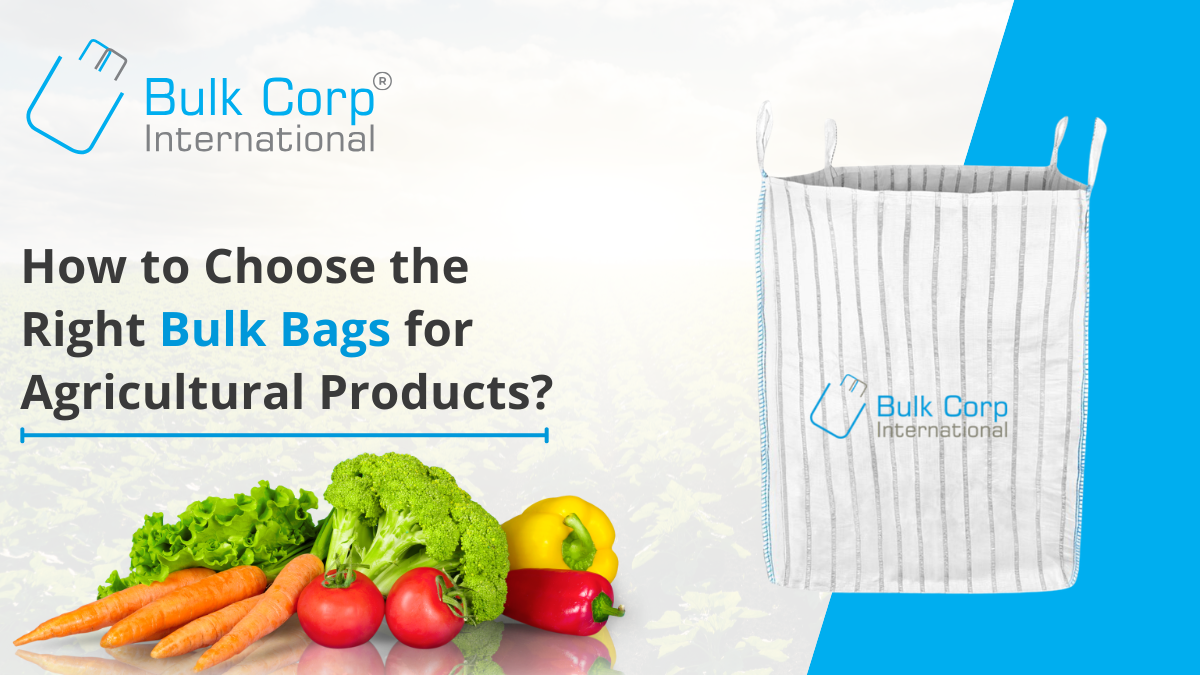
Agriculture depends on efficient storage, handling, and transportation to maintain product quality from harvest to final delivery. Whether businesses deal with grains, seeds, fertilizers, animal feed, spices, pulses, or other agricultural commodities, selecting the right packaging solution can significantly impact operational efficiency and product protection.
Among the most widely used packaging options in the agricultural sector are bulk bags. These versatile containers offer excellent strength, handling convenience, and storage efficiency for a wide range of agricultural applications.
However, not all bulk bags are designed for the same purpose. Choosing the right packaging requires careful evaluation of product characteristics, storage conditions, transportation requirements, and handling methods.
This guide explains the key factors businesses should consider when selecting Bulk Bags For Agricultural Products and how the right packaging solution can improve supply chain performance.
Why are Bulk Bags Widely Used in Agriculture?
Agricultural businesses often handle large quantities of products that require safe and efficient movement throughout the supply chain.
Bulk packaging offers several advantages:
- High load capacity
- Easy transportation
- Reduced handling costs
- Better storage utilization
- Improved operational efficiency
- Product protection during transit
As agricultural supply chains continue to expand, businesses increasingly rely on Agricultural Packaging Bulk Bags to streamline logistics and reduce packaging-related challenges.
Understand the Nature of the Agricultural Product
The first step in selecting the right packaging solution is understanding the specific characteristics of the product being stored or transported.
Different agricultural commodities have unique requirements.
For example:
1. Grains and Pulses
These products require durable packaging that protects against contamination and supports safe stacking.
2. Seeds
Seed packaging often requires protection from moisture and environmental exposure to preserve quality.
3. Animal Feed
Feed products may need packaging that supports long-term storage and easy handling.
4. Fertilizers
Some fertilizer products require specialized packaging designs that can safely handle heavier loads.
Evaluating the physical properties of the product helps determine the most suitable FIBC Bags For Agricultural Products.
Consider Bag Capacity Requirements
Agricultural operations vary significantly in scale.
Some businesses handle smaller quantities, while others transport several tons of material daily.
Choosing the correct bag capacity helps improve:
- Loading efficiency
- Transportation planning
- Warehouse management
- Labor productivity
Using oversized bags can create handling challenges, while undersized packaging may increase transportation and labor costs.
Selecting the appropriate capacity ensures better operational performance throughout the supply chain.
Evaluate Storage Conditions
Storage environments play a major role in packaging selection.
Agricultural products may be stored in:
- Warehouses
- Distribution centers
- Farm storage facilities
- Processing plants
- Export terminals
Businesses should consider factors such as:
Moisture Exposure
Certain products require additional protection against humidity and moisture.
Ventilation Requirements
Products such as onions, potatoes, and garlic often benefit from packaging that supports airflow.
Stacking Conditions
Storage facilities that utilize vertical stacking require strong and stable packaging solutions.
Understanding storage requirements helps businesses choose Agricultural Packaging Bags that support product quality and operational efficiency.
Focus on Material Quality
The quality of the bag directly affects its durability and performance.
High-quality woven polypropylene materials are commonly used in agricultural bulk packaging because they offer:
- Excellent strength
- Tear resistance
- Lightweight construction
- Long service life
- Reliable load-bearing capacity
Businesses should prioritize packaging solutions manufactured according to recognized quality standards.
Investing in quality packaging often reduces product losses and minimizes handling issues.
Select the Right Bag Design
Bulk bags are available in multiple configurations designed for different applications.
Common design options include:
1. Standard Four-Loop Bags
Suitable for a wide range of agricultural commodities and handling systems.
2. Baffle Bags
Designed to maintain a more stable shape and improve storage efficiency.
3. Ventilated Bags
Ideal for agricultural products requiring airflow during storage and transportation.
4. Specialized Agricultural Packaging
Certain products may require customized features based on handling and storage requirements.
Selecting the correct design improves both logistics efficiency and product protection.
Consider Transportation Requirements
Transportation conditions should always influence packaging decisions.
Agricultural products may travel through:
- Local distribution networks
- Regional supply chains
- National transportation routes
- International export markets
During transit, packaging must withstand:
- Loading operations
- Unloading procedures
- Stacking pressure
- Environmental conditions
- Long-distance movement
Durable Bags For Agricultural Products help reduce transportation-related risks while maintaining product quality throughout the journey.
Prioritize Safe Handling
Efficient handling contributes directly to productivity and workplace safety.
Modern bulk bags support easy movement using:
- Forklifts
- Cranes
- Hoists
- Automated handling systems
When evaluating packaging options, businesses should consider:
- Lifting loop configuration
- Load stability
- Filling efficiency
- Discharge convenience
Well-designed packaging improves operational workflows and reduces handling challenges.
Think About Supply Chain Efficiency
Packaging should support the entire agricultural supply chain rather than addressing only one stage of the process.
The right bulk bag can improve:
- Harvest logistics
- Inventory management
- Warehouse operations
- Transportation efficiency
- Export readiness
Businesses that align packaging decisions with supply chain requirements often achieve better long-term results.
Why Quality Manufacturing Matters?
The performance of bulk packaging depends heavily on manufacturing quality.
A reliable manufacturer typically provides:
- Consistent product quality
- Advanced production processes
- Strict quality control
- Industry expertise
- Reliable delivery schedules
Working with an experienced supplier helps ensure that packaging solutions meet operational expectations and industry standards.
Sustainability Considerations
Sustainability has become an important consideration for agricultural businesses worldwide.
Efficient packaging contributes to sustainability by:
- Reducing product losses
- Improving transportation utilization
- Supporting efficient storage
- Minimizing waste
By protecting agricultural commodities throughout the supply chain, high-quality bulk bags help businesses operate more responsibly while improving efficiency.
Common Mistakes to Avoid
Many businesses focus solely on price when selecting packaging solutions.
However, choosing the wrong packaging can result in:
- Product damage
- Increased handling costs
- Storage inefficiencies
- Transportation challenges
- Reduced operational performance
Instead, businesses should evaluate packaging based on overall value, durability, and suitability for their specific agricultural applications.
Conclusion
Choosing the right bulk bags for agricultural products requires careful consideration of product characteristics, storage conditions, transportation requirements, handling methods, and overall supply chain goals.
The right packaging solution helps protect agricultural commodities, improve operational efficiency, reduce product losses, and support smooth logistics operations from harvest to final delivery.
As agricultural supply chains continue to evolve, investing in high-quality agricultural packaging becomes increasingly important. Businesses that prioritize durable and well-designed bulk bags can strengthen their operations while ensuring products reach their destination safely and efficiently.Bulkcorp International supports agricultural industries with reliable bulk packaging solutions designed to meet the demanding requirements of modern storage, handling, and transportation environments.