



How Do Ventilated Bag Manufacturers Ensure Quality for Agricultural Exports?
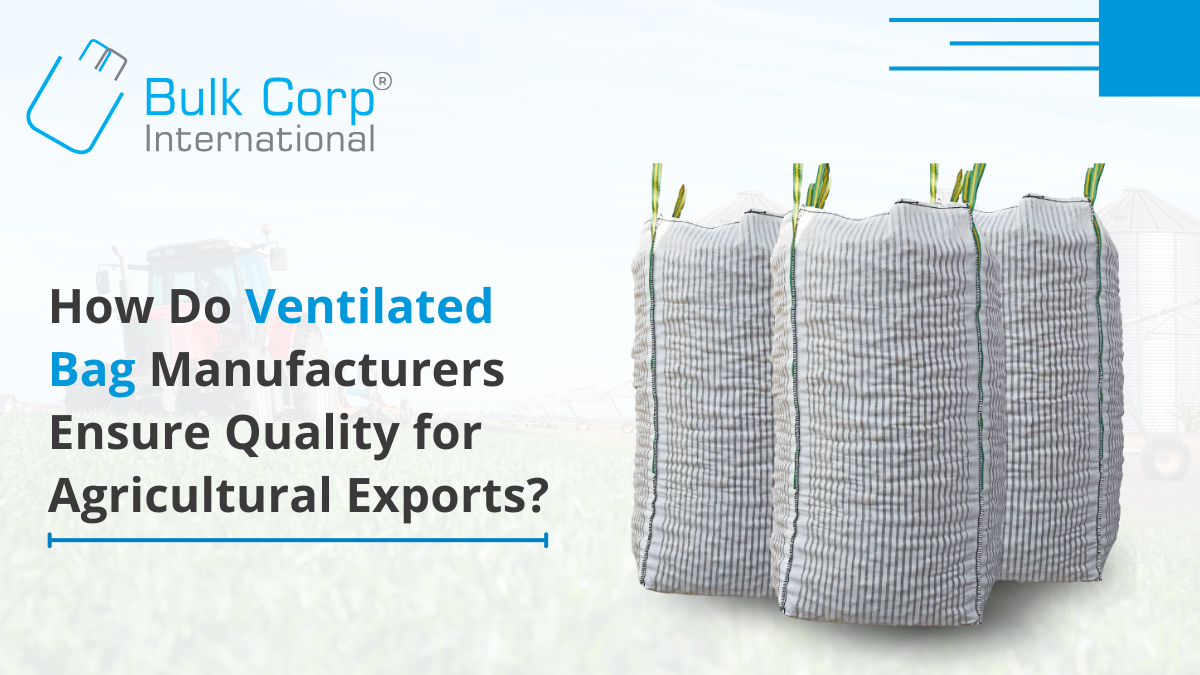
Agricultural exports rely on more than just production quality. Packaging plays an equally critical role in ensuring that products reach international markets in the right condition. Crops like onions, potatoes, and other fresh produce are highly sensitive to moisture and airflow. Even a small imbalance during storage or transit can lead to spoilage, mold growth, and financial losses.
This is where choosing the right ventilated bags manufacturer in India becomes essential. The right manufacturer does not just supply bags but provides a packaging solution designed to protect agricultural goods across long and complex supply chains.
Why Ventilated Bags Are Essential for Agricultural Exports?
Bulk agricultural products require packaging that allows them to breathe. Traditional sacks often trap moisture, which creates an environment where bacteria and mold thrive. This leads to reduced shelf life and quality degradation before the goods even reach their destination.
Ventilated FIBC bags solve this problem by enabling consistent air circulation. Their breathable fabric structure allows heat and moisture to escape while maintaining the strength needed for bulk handling.
This results in:
- Reduced spoilage during storage and transit
- Improved product freshness
- Better weight efficiency compared to smaller sacks
- Easier handling and logistics
Exporters increasingly rely on advanced packaging solutions like Ventilated Bags
to ensure that their products meet international quality standards.
What Defines a High-Quality Ventilated Bag Manufacturer in India?
Not all manufacturers deliver the same level of performance. Quality is the result of a combination of material selection, engineering, testing, and compliance. Below are the key factors that separate reliable manufacturers from average suppliers.
1. Fabric Engineering That Balances Strength and Airflow
The most important feature of a ventilated bag is its ability to allow controlled airflow without compromising structural strength.
Top manufacturers focus on:
- Precision weaving techniques
- Uniform ventilation panels
- Consistent spacing in fabric construction
This ensures that air flows evenly throughout the bag. Uneven airflow can create pockets of moisture, leading to spoilage in specific areas of the load.
By engineering fabric carefully, manufacturers create a balance between durability and breathability, which is essential for agricultural exports.
2. Use of High Quality Raw Materials
Material quality directly impacts both performance and reliability. A strong ventilated bag must handle heavy loads while maintaining its shape and airflow properties.
Leading manufacturers use:
- High tensile polypropylene
- Consistent yarn quality
- Controlled weaving processes
This ensures that the bags can safely carry loads ranging from 500 kg to 2000 kg without tearing or collapsing during transport.
Poor quality materials often result in weak points in the fabric, which can lead to failure during lifting or stacking.
3. Clean and Controlled Manufacturing Environment
Agricultural exports, especially those related to food products, require a high level of cleanliness. Contamination during manufacturing can compromise product safety and lead to rejection in international markets.
Reliable manufacturers maintain:
- Dust controlled production areas
- Clean handling systems
- Strict quality monitoring during production
Bulk Corp International follows structured manufacturing practices that align with global standards, ensuring that packaging meets the expectations of international buyers.
4. Rigorous Load Testing and Safety Validation
A ventilated bag must perform under real-world conditions. From loading to shipping and unloading, it goes through multiple stress points.
Manufacturers ensure reliability through:
- Safe Working Load testing
- Safety factor validation such as 5:1 and 6:1
- Drop tests and stacking tests
These tests confirm that the bags can handle weight, pressure, and movement without failure.
This is especially important for exporters dealing with large shipments, where even a small defect can result in significant losses.
5. Customisation Based on Agricultural Requirements
Different agricultural products have different storage and transportation needs. A one-size approach does not work in bulk packaging.
Quality focused manufacturers offer:
- Multiple loop configurations for easy lifting
- Flexible filling and discharge options
- Custom sizes based on crop type and volume
For example:
- Onions require maximum ventilation
- Potatoes need controlled airflow with structural stability
Customisation ensures that the packaging supports the specific needs of the product rather than forcing a standard solution.
6. Compliance with Global Export Standards
International markets have strict requirements when it comes to packaging. Exporters must ensure that their packaging meets these standards to avoid shipment rejection.
Manufacturers support this by ensuring:
- Compliance with international quality standards
- Proper labeling and traceability
- Consistency across production batches
This builds trust with buyers and ensures smooth operations in global trade.
7. Continuous Quality Control Across Production
Quality is not a one-step process. It requires monitoring at every stage of production.
Top manufacturers implement:
- In process inspections
- Final product quality checks
- Documentation for traceability
This ensures that every batch maintains the same level of quality, which is crucial for exporters working with large volumes.
Why India Is a Preferred Hub for Ventilated Bulk Bags?
India has become a key player in the global bulk packaging industry. Exporters worldwide prefer sourcing from India due to several advantages.
These include:
- Advanced manufacturing infrastructure
- Skilled workforce with industry expertise
- Cost effective production
- Strong export capabilities
Working with an experienced ventilated bag manufacturer in India allows businesses to maintain a balance between quality and cost while scaling their operations.
How to Choose the Right Manufacturer for Agricultural Exports?
Selecting the right manufacturer is a strategic decision. Exporters should evaluate suppliers based on:
- Certifications and compliance standards
- Experience in agricultural packaging
- Ability to customise products
- Testing and quality assurance processes
- Global export track record
A reliable manufacturer will not just supply bags but will act as a long-term partner in ensuring product safety and efficiency.
Common Mistakes Exporters Should Avoid
Many exporters face issues not because of the product itself, but due to poor packaging choices.
Common mistakes include:
- Choosing low cost suppliers without quality checks
- Ignoring ventilation requirements for specific crops
- Not verifying load capacity and safety standards
- Lack of consistency in packaging quality
Avoiding these mistakes can significantly improve export success rates and reduce losses.
Conclusion
In agricultural exports, packaging is not just a supporting element. It directly impacts product quality, shelf life, and overall profitability.
A reliable ventilated bag manufacturer in India ensures that every aspect of the bag, from fabric design to testing and compliance, contributes to better performance.
Bulk Corp International follows a quality-driven approach that supports exporters in maintaining product integrity across global supply chains.
Choosing the right packaging partner helps reduce losses, improve efficiency, and build long-term trust in international markets.