


When Do You Need UN Certified Bulk Bags?
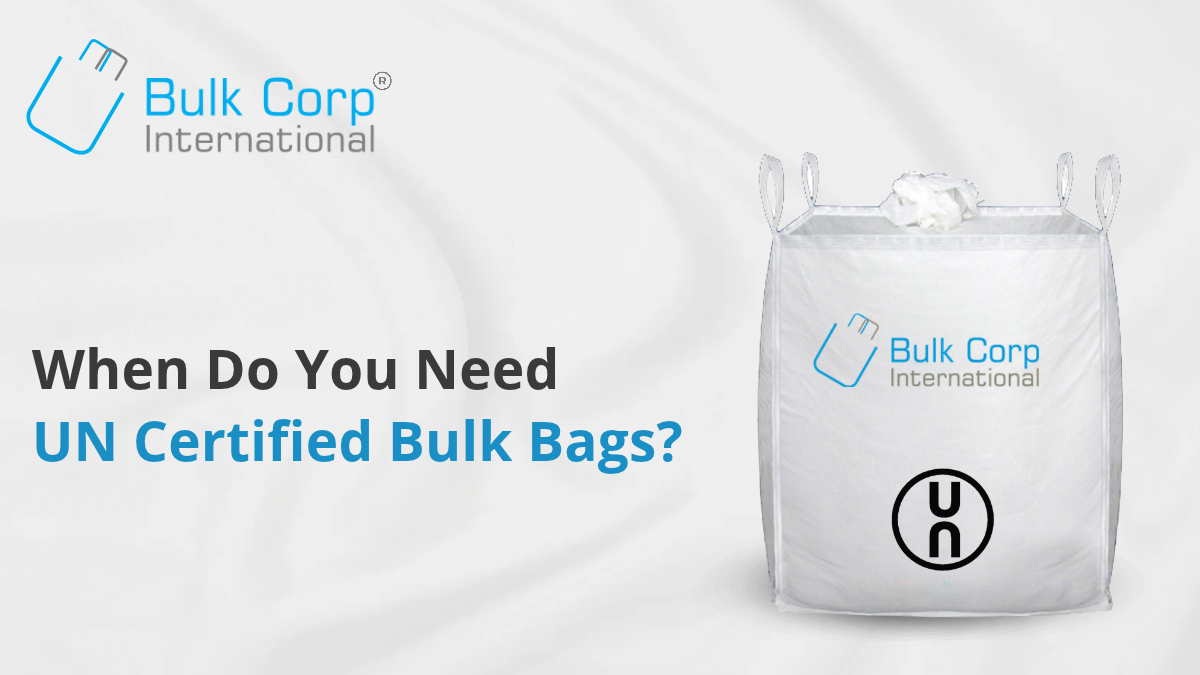
Not every bulk material requires specialised packaging, but when you are handling or transporting hazardous goods, choosing the right container becomes much more important. A standard FIBC may be suitable for many non-hazardous products, but certain dangerous goods require packaging that has been tested against specific performance requirements.
This is where UN Certified Bulk Bags come into consideration.
UN certified bags are designed for the transportation of certain hazardous products and are tested to verify their performance under demanding handling and transportation conditions. However, simply dealing with a chemical or industrial product does not automatically mean that any UN bag will be suitable. The bag specification must match the material, hazard classification, packing group, filling requirements, and conditions of transport.
So, when do you actually need UN Certified Bulk Bags? Let’s look at the situations where they can be an important part of your packaging and logistics process.
What are UN Certified Bulk Bags?
UN Certified Bulk Bags are specialised Flexible Intermediate Bulk Containers (FIBCs) designed for carrying certain dangerous goods. They are associated with the United Nations Recommendations on the Transport of Dangerous Goods, commonly referred to as the Orange Book.
Unlike a conventional bulk bag, a UN certified FIBC is subjected to specific performance tests. These can include drop, top lift, tear, stacking, topple, and righting tests. The certification relates to the particular FIBC design that has been tested and applies within the limits established by that testing.
Bulk Corp International offers UN bag configurations including 13H1, 13H2, 13H3 and 13H4, covering different combinations of coated or uncoated woven plastic and liner construction.
1. When You Are Transporting Regulated Dangerous Goods
The most important reason to consider a UN certified bulk bag is the nature of the material being transported.
If your product is classified as dangerous goods under the applicable transportation regulations, its packaging may need to meet specific UN requirements. Depending on the classification, ordinary packaging may not provide the required level of tested performance.
This can be particularly relevant for businesses involved in the manufacture, storage, distribution, or export of hazardous industrial materials.
Before selecting a bag, identify the product’s applicable dangerous-goods classification and packaging requirements. The correct FIBC should then be selected based on the requirements for that particular material and its intended transportation.
2. When Your Product Falls Under a Specific Packing Group
UN dangerous goods packaging uses packing groups to indicate the degree of danger presented by certain substances.
For FIBCs, the applicable UN marking can include:
- X for Packing Group I requirements where applicable to the packaging type
- Y for Packing Group II
- Z for Packing Group III
However, buyers should not assume that every FIBC can be used for every packing group. Bulk Corp International specifically notes that Packing Group I with the X symbol is not applicable to FIBCs in its stated classification, and that the appropriate UN specification depends on the tested bag design and its limits.
This makes it important to provide your supplier with accurate information about the material before ordering UN Certified Bulk Bags.
3. When Standard FIBC Packaging Does Not Meet Your Application
Standard bulk bags are widely used for products such as minerals, agricultural materials, food ingredients, chemicals, and powders. But a standard FIBC is not automatically suitable for dangerous goods.
Hazardous materials can introduce additional packaging considerations, including:
- Impact during transportation
- Fabric or seam failure
- Product leakage
- Stacking pressure
- Moisture exposure
- Handling conditions
- Filling and discharge requirements
- Electrostatic considerations
A UN tested FIBC provides a different level of assurance because the specific bag design has undergone relevant performance testing.
The objective is not simply to purchase a bag labelled “UN”. The entire specification needs to be appropriate for the intended application.
4. When Your Shipment Will Experience Demanding Handling Conditions
Bulk bags can be lifted, moved, stacked, loaded, unloaded, and transported multiple times before reaching their destination.
During these stages, the FIBC can experience impact, lifting forces, pressure, and other physical stresses. This is especially important when the contents are classified as dangerous goods.
UN testing evaluates specific aspects of FIBC performance. Bulk Corp International lists tests including the top lift test, tear test, stacking test, drop test, topple test, and righting test. The test report identifies the specification of the FIBC tested and the levels at which it passed.
For businesses moving hazardous products through complex supply chains, understanding these tested limits is an important part of packaging selection.
5. When Your Product Requires a Liner or Coated Construction
The material inside the bag also influences the FIBC construction you may need.
For example, some products may require additional protection against moisture, fine particles, or product interaction with the outer fabric. In these cases, a suitable liner or coated fabric construction may be considered.
Bulk Corp International provides four UN FIBC construction types:
- 13H1: Woven plastics without coating and without liner
- 13H2: Woven plastics, coated and without liner
- 13H3: Woven plastics, uncoated and with liner
- 13H4: Woven plastics, coated and with liner
The correct option depends on the characteristics of the product and the requirements of the certified application. A liner should therefore be selected as part of the overall FIBC specification rather than simply added as an optional feature.
6. When You Need a Specific Filling or Discharge Configuration
Packaging safety is only one part of the process. Your FIBC must also work with the way your facility fills, handles, stores, and empties the product.
Depending on the application, UN bags can be configured with different filling and discharge options. These may include filling spouts, open-top constructions, duffel tops, discharge spouts, protected discharge systems, and full drop bottoms.
Choosing the right construction can make handling more practical while helping the packaging fit your existing production and logistics processes.
Before placing an order, consider:
- How the bag will be filled
- What equipment will lift it
- How it will be stored
- How the material will be discharged
- Whether the product requires a liner
- The required safe working load
- The expected transportation conditions
7. When You Need a Certified Bag for Export or International Transportation
International shipments can involve multiple stages of handling and transportation. If the product is classified as dangerous goods, packaging requirements become an important part of the export process.
Using an appropriately tested and certified FIBC can help ensure that the packaging specification aligns with the applicable dangerous-goods requirements for the intended shipment.
However, certification should not be treated as a blanket approval for every product or every route. The certification is specific to the FIBC type tested and is valid within the limits of that test.
This is why exporters should confirm the product classification, applicable transportation regulations, packaging requirements, and certified FIBC specification before shipping.
What Should You Check Before Ordering UN Certified Bulk Bags?
Choosing the right UN bag starts with understanding your product.
Before contacting a UN Certified Bulk Bags manufacturer, have the following information available:
- Product name and description
- Hazard classification
- Applicable packing group
- Required filling weight
- Bulk density
- Product form, such as powder or granules
- Moisture sensitivity
- Filling and discharge method
- Storage conditions
- Transportation requirements
- Liner or coating requirements
- Any applicable electrostatic or handling considerations
This information helps the manufacturer determine which FIBC construction and certified specification is appropriate for the application.
Why Choosing the Right UN Bag Matters
The purpose of UN certified packaging is not simply to add another specification to your purchasing list. It is about matching the packaging to the risks associated with the material and the conditions under which it will be handled and transported.
A correctly specified FIBC can provide tested performance for its intended application while supporting safer handling of dangerous goods.
Bulk Corp International offers UN Certified Bulk Bags with different fabric, liner, SWL, printing, lifting, filling, and discharge options. Its UN bag page lists an SWL range of 500 kg to 1,500 kg, along with coated and uncoated fabric and tubular or shaped liner options.
Get the Right UN Certified Bulk Bags for Your Application
If your business handles or transports hazardous materials, the right bulk bag should be selected based on the product classification, packing requirements, bag construction, testing limits, filling weight, and transportation conditions. A UN marking alone does not make every FIBC suitable for every dangerous good.
If you are looking for UN Certified Bulk Bags for your industrial or export packaging requirements, explore the UN bag solutions from Bulk Corp International. Discuss your product, capacity, construction, liner requirements, and certification needs with the team to identify an appropriate FIBC specification for your application.