


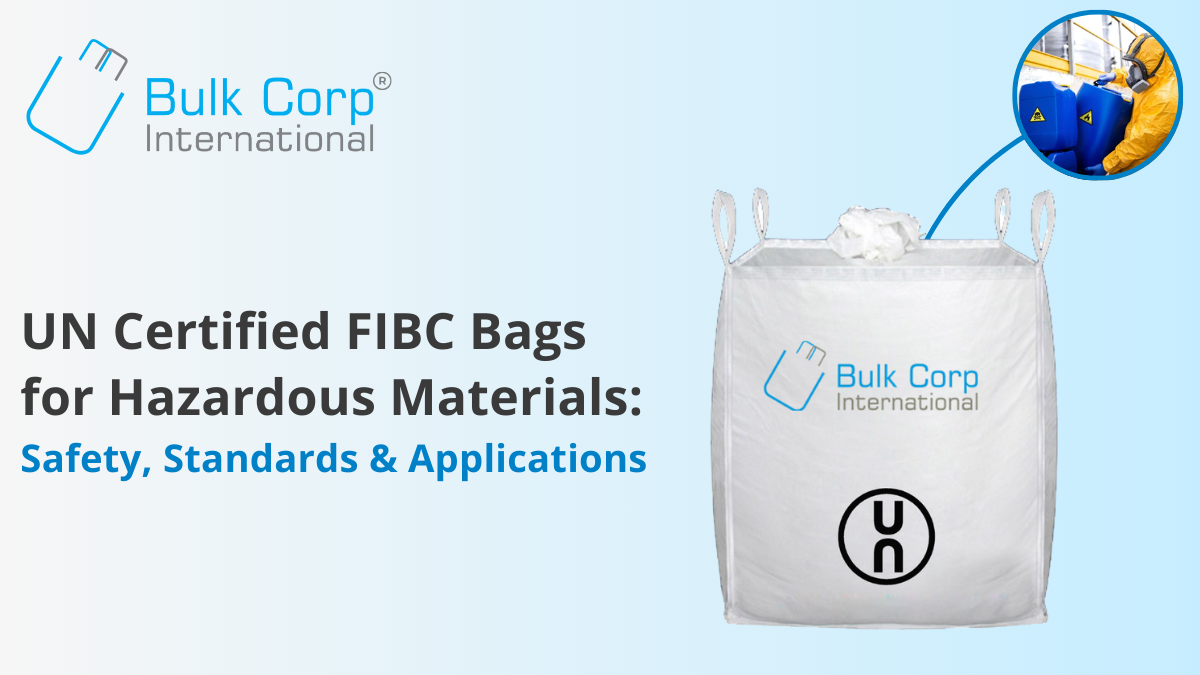
UN Certified FIBC Bags for Hazardous Materials: Safety, Standards & Applications
The transportation and storage of hazardous materials demand the highest level of safety and compliance. From flammable chemicals to toxic powders and industrial waste, improper packaging can lead to catastrophic accidents, financial losses, and regulatory penalties. This is where UN-certified FIBC bags play a crucial role.
These specialized bulk bags for hazardous materials are designed to meet strict international safety standards while offering strength, durability, and reliability across various industries.
In this article, we explore the safety aspects, technical standards, applications, and benefits of using UN-approved FIBC bags for hazardous goods.
What Are UN Certified FIBC Bags?
UN Certified FIBC bags, also known as UN bags for hazardous goods, are flexible intermediate bulk containers that comply with the United Nations Recommendations on the Transport of Dangerous Goods.
These bags are designed specifically to carry materials classified as dangerous or hazardous, including toxic substances, flammable powders, corrosive chemicals, and environmentally harmful goods.
Unlike standard bulk bags, UN FIBCs undergo rigorous performance testing to ensure safety during handling, stacking, transport, and long-term storage.
Importance of UN Certification for Hazardous Material Packaging
When dealing with dangerous goods, a standard bag is simply not enough. The UN certification ensures that the bag meets specific criteria for:
- Strength and durability
- Impact and drop resistance
- Stackability
- Leak-proof performance
- Safe handling under extreme conditions
Using UN-certified bulk bags for hazardous materials helps industries:
- Reduce accident risks
- Meet international shipping regulations
- Protect workers and the environment
- Avoid legal penalties
- Improve supply chain safety
UN Standards and Testing for FIBC Bags
To qualify as a UN-approved FIBC, a bag must pass several stringent tests under controlled conditions. These include:
1. Drop Test
The filled bag is dropped from a specified height to check its ability to withstand impact without rupture.
2. Top Lift Test
The FIBC is lifted from its loops to simulate real-world handling and transportation stress.
3. Stacking Test
The bag is tested under heavy loads for prolonged periods to analyze compression resistance during warehouse stacking.
4. Tear Test
This checks the resistance of the fabric against tearing forces.
5. Stability Test
Ensures that the bag remains stable during stacking and transportation.
These tests ensure that UN-certified FIBC bags can safely transport hazardous goods in road, rail, and sea shipments.
Types of UN Certified FIBC Bags
There are various types of UN FIBC bulk bags based on the nature of hazardous materials:
- Single Trip UN Bags: Designed for one-time use, ideal for exporting hazardous products.
- Multi-Trip UN Bags: Reinforced for multiple usage cycles with re-certification protocols.
- Conductive (Type C) FIBC Bags: Used for flammable powders, preventing static discharge.
- Antistatic FIBC Bags: Prevent electrostatic sparks that could trigger combustion.
- Liner FIBC Bags: Included with inner liners for additional leak protection.
Applications of UN Certified FIBC Bags
Let’s explore how UN-certified jumbo bags support various industries:
1. Chemical Industry
Chemical manufacturers transport toxic powders, acids, and corrosive materials using UN-approved FIBC bags to prevent leaks and spills.
2. Mining and Minerals
Used for transporting ore concentrates, hazardous dust, and tailings material.
3. Agrochemical Sector
Pesticides, herbicides, and fertilizers classified as dangerous goods rely on UN-certified bulk bags for safe containment.
4. Waste Management & Recycling
For transporting hazardous waste, industrial sludge, and contaminated materials safely.
Key Safety Features of UN Certified FIBC Bags
High-quality UN FIBC bags for hazardous materials offer several critical safety features:
- High tensile strength fabric to prevent rupture
- Reinforced seams for added durability
- UV-stabilized material for outdoor storage
- Leak-proof construction
- Moisture-resistant liners
- Anti-static and conductive options
- Tamper-proof closures
These features protect both the product and the people handling it.
Benefits of Using UN Certified FIBC Bags
Choosing UN-certified bulk bags for dangerous goods offers multiple benefits:
- Enhanced Safety: Reduced risk of spills, contamination, and accidents.
- International Compliance: Meets global transportation regulations for hazardous materials.
- High Load Capacity: Can carry up to 2000 kg, depending on design.
- Cost-Effective: Lower packaging and shipping costs compared to rigid containers.
- Space-Saving: Collapsible design reduces storage and logistics expenses.
Choosing the Right UN Certified FIBC Bag
When selecting the right UN-certified jumbo bag, consider:
- Type of hazardous material
- Density and flow characteristics
- Transportation mode (road, rail, sea)
- Environmental conditions
- Reusability requirements
- Regulatory destination requirements
Always partner with a trusted manufacturer of UN-certified FIBC bags that adheres to international quality standards.
Why Quality Manufacturing Matters?
The performance of a UN FIBC heavily depends on manufacturing quality. Precision stitching, fabric weaving, load testing, and raw material quality determine whether the bag will perform under real-world conditions.
A reliable manufacturer ensures:
- Consistent product quality
- Valid UN certifications
- Proper batch testing
- Custom bag configurations
- Future Demand for UN Certified FIBC Bags
With the growth of the chemical and hazardous waste sectors, the demand for UN-approved bulk bags is rising globally. Environmental safety regulations and compliance norms are also becoming stricter, making UN-certified packaging a necessity rather than an option.
Conclusion
UN Certified FIBC Bags are the backbone of safe hazardous material transportation. From chemical plants and mining operations to agrochemical warehouses and waste management facilities, these bags ensure safety, compliance, and efficiency at every stage of the supply chain.
By investing in high-quality UN-certified FIBC bags for hazardous materials, businesses not only protect their operations but also demonstrate a commitment to environmental and workplace safety.
Partner with Bulk Corp International for Reliable UN Certified FIBC Bags
If you are looking for a trusted supplier of premium UN-certified FIBC bags, choose Bulk Corp International — one of the leading manufacturers and exporters of high-quality bulk packaging solutions.
Bulk Corp International offers:
- Globally certified UN FIBC bags
- Custom-designed packaging solutions
- Advanced quality control
- Reliable worldwide delivery
- Industry expertise across hazardous sectors
Secure your hazardous material packaging with Bulk Corp International today — because safety should never be compromised.