


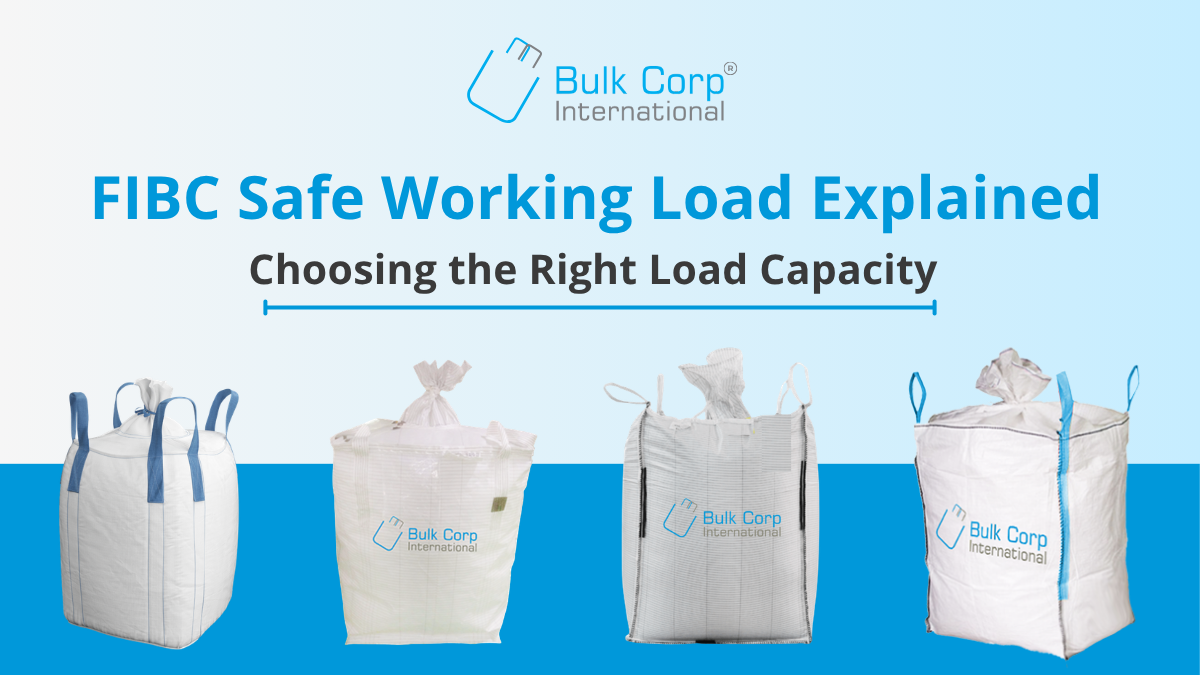
FIBC Safe Working Load Explained: Choosing the Right Load Capacity
When transporting bulk materials, selecting the right Flexible Intermediate Bulk Container (FIBC) is about more than size or fabric quality. One of the most critical factors is FIBC Safe Working Load. Choosing a bag with the correct load capacity helps protect workers, prevents product loss, improves operational efficiency, and ensures compliance with international safety standards.
Whether you’re handling chemicals, agricultural products, minerals, food ingredients, or construction materials, understanding Safe Working Load is essential before purchasing bulk bags.
At Bulkcorp International, we help businesses choose high-quality FIBCs designed to match their specific handling and transportation requirements. This guide explains everything you need to know about FIBC Safe Working Load and how to select the right load capacity for your operations.
What is FIBC Safe Working Load?
FIBC Safe Working Load (SWL) refers to the maximum weight an FIBC bag is designed to safely carry during normal handling, lifting, transportation, and storage.
Manufacturers determine the SWL through rigorous design calculations and testing to ensure the bag performs safely under recommended operating conditions.
For example:
- An FIBC with an SWL of 500 kg should never carry more than 500 kg.
- A bag rated for 1000 kg is designed to safely transport loads up to one metric ton.
- Heavy-duty industrial FIBCs may support 1500 kg, 2000 kg, or more, depending on their construction and intended application.
Exceeding the Safe Working Load increases the risk of bag failure, damaged products, workplace accidents, and costly downtime.
Why Does Safe Working Load Matters?
Selecting the correct load capacity offers several operational advantages.
Improves Workplace Safety
Overloaded bags place excessive stress on lifting loops, seams, and fabric. Using the correct SWL reduces the likelihood of tearing or lifting failures, helping protect employees and equipment.
Protects Valuable Products
Many bulk materials including chemicals, food ingredients and minerals have significant value. A damaged FIBC can result in contamination, product loss, and expensive cleanup operations.
Extends Bag Performance
Using FIBCs within their rated capacity minimizes unnecessary wear and helps maintain structural integrity throughout their intended lifecycle.
Supports Regulatory Compliance
Many industries follow strict packaging and transportation requirements. Choosing the correct Safe Working Load helps companies meet internal safety policies and international packaging standards.
Understanding the Safety Factor
Safe Working Load is closely related to another important specification called the Safety Factor (SF).
The Safety Factor indicates how much stress a bag can withstand during testing compared to its rated working load.
Common safety factors include:
| Safety Factor | Recommended Use |
| 5:1 | Single-trip FIBCs |
| 6:1 | Multiple-use FIBCs |
| 8:1 | Specialized heavy-duty applications |
For example:
- SWL = 1000 kg
- Safety Factor = 5:1
During testing, the bag must withstand approximately 5000 kg before failure occurs.
It’s important to note that this does not mean the bag should carry 5000 kg in actual use. The operational load should always remain within the specified Safe Working Load.
Factors That Determine the Right Load Capacity
Choosing the correct FIBC involves more than simply selecting the largest available bag.
1. Product Density
Materials vary significantly in density.
Examples include:
- Plastic granules
- Flour
- Sugar
- Cement
- Sand
- Iron ore
- Fertilizer
Dense materials reach weight limits before filling the entire bag volume, while lightweight materials may fill the bag completely without approaching the maximum load.
2. Filling Method
Different filling systems create different loading conditions.
Consider whether your operation uses:
- Gravity filling
- Automatic filling systems
- Manual filling
- Pneumatic filling
Proper filling prevents uneven weight distribution that can place excessive stress on the bag.
3. Lifting Equipment
The lifting method also affects bag selection.
Common handling equipment includes:
- Forklifts
- Cranes
- Hoists
- Bulk handling systems
Ensure the lifting loop configuration matches your equipment for safe handling.
4. Transportation Conditions
Consider how the bags will travel.
Questions to evaluate include:
- Will the bags be stacked?
- Will they travel internationally?
- Will they be transported by sea, rail, or truck?
- Will they remain in storage for extended periods?
Transportation conditions influence the type and construction of the FIBC required.
5. Type of Material
Different industries have different packaging needs.
Examples include:
- Food-grade powders
- Hazardous chemicals
- Agricultural products
- Construction materials
Each application may require specialized bag designs in addition to the correct Safe Working Load.
Common FIBC Safe Working Load Ratings
The following capacities are widely used across industries.
| Safe Working Load | Typical Applications |
| 500 kg | Food ingredients, seeds, specialty products |
| 750 kg | Agricultural materials |
| 1000 kg | Chemicals, polymers, grains |
| 1250 kg | Construction materials |
| 1500 kg | Minerals and industrial products |
| 2000 kg+ | Heavy industrial applications |
The ideal capacity depends on your material characteristics and operational requirements.
Risks of Choosing the Wrong Load Capacity
Selecting an undersized FIBC can create several problems.
These include:
- Bag rupture
- Product spillage
- Workplace injuries
- Equipment damage
- Supply chain disruptions
- Increased replacement costs
- Customer complaints
- Regulatory issues
Choosing an oversized bag may also increase packaging costs unnecessarily.
The goal is to match the bag precisely to the intended application.
How to Select the Right FIBC?
Before ordering bulk bags, ask the following questions:
- What is the maximum product weight?
- What is the product’s bulk density?
- Is the bag intended for single or multiple trips?
- Which lifting equipment will be used?
- Will the bags be stacked?
- Does the application require food-grade or UN-certified packaging?
- Are there environmental factors such as moisture or UV exposure?
Answering these questions helps ensure the selected FIBC performs safely and efficiently.
Why Quality Manufacturing Matters?
Safe Working Load depends not only on design but also on manufacturing quality.
Reliable manufacturers implement:
- High-strength woven polypropylene fabric
- Consistent stitching quality
- Reinforced lifting loops
- Strict quality inspections
- Load testing
- Compliance with international standards
Every stage of production contributes to the bag’s ability to perform safely under load.
Why Choose Bulkcorp International?
At Bulkcorp International, we manufacture premium-quality FIBCs engineered for demanding industrial applications. Our team works closely with customers to understand their product characteristics, handling methods, and transportation requirements before recommending the most suitable bulk bag solution.
Our capabilities include:
- Custom-designed FIBC solutions
- Food-grade manufacturing
- UN-certified bags
- Multiple lifting configurations
- High-strength woven polypropylene construction
- Strict quality control and testing
- Export-ready packaging solutions for global industries
By focusing on quality, safety, and customization, we help businesses improve operational efficiency while reducing packaging risks.
Conclusion
Understanding FIBC Safe Working Load is essential for maintaining safety, protecting products, and optimizing bulk material handling operations. Selecting the appropriate load capacity reduces operational risks, extends packaging performance, and supports efficient logistics across industries.
Working with an experienced manufacturer makes the selection process easier. Bulkcorp International provides high-quality, customized FIBC solutions that meet diverse industrial applications while adhering to stringent quality and safety standards. Whether you require standard bulk bags, food-grade FIBCs, or specialized designs, our team can help you choose the right solution for your specific load requirements.
By investing in the right FIBC from the outset, businesses can improve safety, minimize costs, and build a more reliable supply chain.