



What Buyers Should Know About FIBC Bulk Bag Component Compatibility
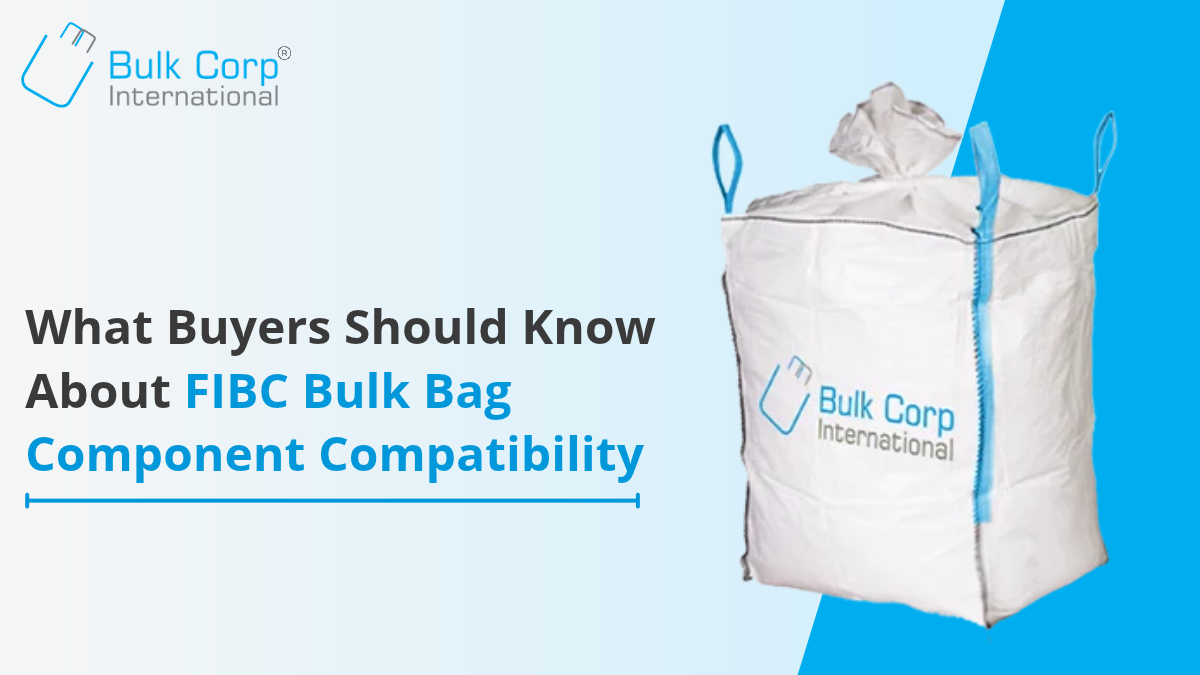
Flexible Intermediate Bulk Containers (FIBCs), commonly known as jumbo bags or bulk bags, provide practical packaging solutions for industries handling food ingredients, chemicals, fertilizers, minerals, and other bulk materials. However, choosing the right bag involves more than selecting its size or load capacity. Every component must work together to protect the product and support safe, efficient handling.
Understanding FIBC bulk bag components helps buyers select packaging that matches their products, filling systems, storage conditions, and discharge equipment. Fabric, liners, coatings, lifting loops, and spouts each serve a different purpose, but an incompatible combination can cause leakage, product contamination, handling problems, or safety risks.
Bulk Corp International provides FIBC packaging solutions for various industrial applications. This guide explains the key compatibility factors buyers should consider before selecting or ordering bulk bags.
1. What Are FIBC Bulk Bag Components?
FIBC bags contain several components that work together to support product containment, lifting, filling, and discharge. Their specifications depend on the material being packed and the operating environment.
The main components include:
- Fabric: Forms the main body of the bag and provides structural strength.
- Liners: Provide an additional layer for product protection when required.
- Coatings: Help reduce moisture penetration and fine-particle leakage through woven fabric.
- Lifting loops: Allow compatible lifting equipment to handle the filled bag.
- Filling spouts: Connect the bag to suitable filling systems.
- Discharge spouts: Support controlled unloading of the contents.
- Seams and closures: Help maintain containment during storage and transportation.
Buyers should evaluate these components as a complete packaging system rather than selecting each feature independently.
2. FIBC Fabric and Liner Compatibility
FIBC fabric and liner compatibility is essential when packaging materials that require additional protection from moisture, contamination, or product loss.
Most standard FIBC bags use woven polypropylene (PP) fabric. Manufacturers can combine this fabric with different liners depending on the product’s characteristics and the required level of protection.
Choosing the Right Liner
Common liner options include tubular liners and form-fit liners. Tubular liners provide a relatively simple inner layer, while form-fit liners follow the shape of the bag and can align more closely with its filling and discharge openings.
When selecting a liner, consider:
- Compatibility with the packed material
- Required moisture and contamination protection
- Liner thickness and mechanical durability
- Filling and discharge requirements
- Temperature and storage conditions
- Any applicable food-contact or regulatory requirements
For example, fine powders may require a liner or sift-resistant construction to reduce product leakage. Moisture-sensitive materials may require a suitable barrier liner.
However, a liner does not automatically make every FIBC suitable for every product. Buyers should confirm the complete design with their supplier.
3. Bulk Bag Liners and Coatings
Bulk bag liners and coatings can improve product protection, but they serve different purposes.
A liner creates an additional layer inside the bag, while a coating applies a layer to the fabric. The right choice depends on the material, required protection, and operating conditions.
When Should You Choose Coated Fabric?
Coated fabric can help reduce moisture penetration and fine-particle leakage through the woven structure. It can be useful when packaging fine powders or granules that require improved containment.
However, coated fabric does not automatically make a bag waterproof or airtight.
When Is an Inner Liner More Suitable?
A liner may provide additional protection when the product requires a separate contact surface or a specific moisture, oxygen, or contamination barrier.
Buyers should also consider how the liner fits inside the bag. A poorly fitted liner may fold, shift, or interfere with product flow during filling and discharge.
The best solution balances product protection, handling efficiency, and cost.
4. FIBC Discharge Spout Compatibility
FIBC discharge spout compatibility plays an important role in efficient unloading. The discharge spout must match the receiving equipment and the flow characteristics of the packed material.
A mismatch can slow unloading, cause blockages, increase spillage, or make the process difficult to control.
Key Factors to Check
Before selecting a discharge spout, confirm:
- Spout diameter and length
- Compatibility with the receiving hopper or equipment
- Closure type and fastening method
- Material flow characteristics
- Dust containment requirements
- Liner outlet alignment, where applicable
For example, fine powders may need a suitable closure and containment arrangement to reduce leakage. Materials that tend to bridge or clog may require a different discharge configuration.
The filling spout also deserves attention. Its dimensions and connection method should match the filling equipment to support a controlled and efficient process.
Buyers should share equipment drawings or measurements with the manufacturer when specifying custom openings.
5. Lifting Loops, Fabric Strength and Load Capacity
Lifting loops must work with the bag’s fabric, seams, and intended safe working load. A compatible lifting arrangement supports safe handling with suitable forklifts or lifting equipment.
Buyers should verify:
- Safe working load (SWL)
- Required safety factor
- Loop length and positioning
- Loop construction and reinforcement
- Compatibility with handling equipment
- Applicable testing and documentation
A bag’s nominal dimensions or appearance do not establish its load capacity. The complete design must meet the required performance specifications.
Never modify lifting loops or use damaged bags without consulting the manufacturer. Correct bag selection and handling procedures help protect workers and reduce the risk of product loss.
6. Electrostatic Compatibility and Safety
Some materials and operating environments create electrostatic hazards during filling, handling, or discharge. In these situations, buyers must evaluate the bag, liner, packed product, and surrounding atmosphere together.
FIBCs have different electrostatic classifications:
- Type A: Provides no specific static protection.
- Type B: Uses fabric designed to prevent certain high-energy propagating brush discharges but does not dissipate accumulated charge.
- Type C: Uses interconnected conductive threads and requires proper grounding during filling and discharge.
- Type D: Uses suitable static-dissipative fabric designed to control electrostatic discharge without a grounding connection.
Liners can change the electrical behaviour of the complete packaging system. Not every liner is suitable for every static-protective bag.
For applications involving flammable materials, combustible dust, or potentially explosive atmospheres, qualified safety personnel should assess the hazards and confirm the appropriate bag and liner combination against applicable requirements.
Do not select an electrostatic classification based on price or product appearance alone.
7. Food-Grade and Chemical Compatibility
The materials used in an FIBC must suit the product they contain. This consideration becomes particularly important for food ingredients and chemicals.
Food-Grade Applications
Food-grade packaging requires suitable materials and manufacturing controls to help prevent contamination. Buyers should confirm the liner’s suitability for direct or indirect food contact, traceability requirements, and relevant supporting documentation.
Bulk Corp International manufactures food-grade FIBC packaging and highlights its certified production facilities and quality management systems.
Chemical Applications
Chemical compatibility depends on the specific substance, concentration, temperature, and contact conditions. Buyers should not assume that polypropylene fabric or a standard polyethylene liner will suit every chemical.
Before ordering, provide the supplier with the material’s name, relevant safety data, temperature conditions, and any known compatibility requirements. The supplier can then help assess suitable materials and construction options.
8. A Practical FIBC Bag Selection Guide
A structured FIBC bag selection guide helps buyers specify compatible components before production begins.
| Component | What buyers should confirm |
| Fabric | Strength, construction, coating, and product suitability |
| Liner | Material, fit, barrier properties, and compatibility |
| Top opening | Filling equipment and closure requirements |
| Discharge spout | Dimensions, flow, and receiving equipment |
| Lifting loops | SWL, positioning, and handling method |
| Electrostatic type | Product hazards, atmosphere, and grounding needs |
| Seams and closures | Containment and performance requirements |
| Documentation | Testing, certification, and applicable compliance |
Providing these details early helps manufacturers recommend suitable industrial bulk packaging solutions and reduces the risk of specification errors.
9. Common Compatibility Mistakes to Avoid
Even a well-made FIBC can perform poorly when its components do not match the application. Buyers should avoid these common mistakes:
- Selecting a liner without checking material compatibility.
- Choosing a discharge spout without measuring the receiving equipment.
- Assuming coated fabric provides complete waterproof protection.
- Ignoring electrostatic compatibility between the bag and liner.
- Selecting lifting arrangements without confirming the required load.
- Overlooking food-contact or dangerous-goods requirements.
- Changing the approved bag design without consulting the manufacturer.
A clear specification and review of the complete packaging system can prevent many of these problems before production.
How Bulk Corp International Supports Your Packaging Requirements
Choosing compatible FIBC components helps businesses protect products, improve handling efficiency, and maintain consistent packaging performance.
Bulk Corp International manufactures FIBC bags and container liners for applications across food, chemical, agricultural, mining, and other industries. The company offers different bag configurations to support varying product and handling requirements.
When requesting a quotation, share your product details, required capacity, filling and discharge equipment, liner requirements, and applicable safety standards. This information helps the team evaluate suitable packaging options for your application.
Looking for suitable industrial bulk packaging solutions? Bulk Corp International to learn more about its FIBC products and discuss your packaging requirements.