



Industries That Rely on Conductive Bags Suppliers for Safe Static Sensitive Material Handling
Static electricity rarely gets attention until something goes wrong. In bulk material handling, it builds quietly as powders flow, materials rub against surfaces, and bags are filled or discharged. In the right conditions, that invisible charge can turn into a spark. And in industries dealing with fine particles or combustible environments, a spark is all it takes to cause serious damage.
This is why many industries do not treat packaging as a basic requirement. They see it as a safety system. A trusted conductive bags supplier plays a direct role in preventing electrostatic risks and keeping operations stable, safe, and compliant.
Understanding the Role of Conductive Bags
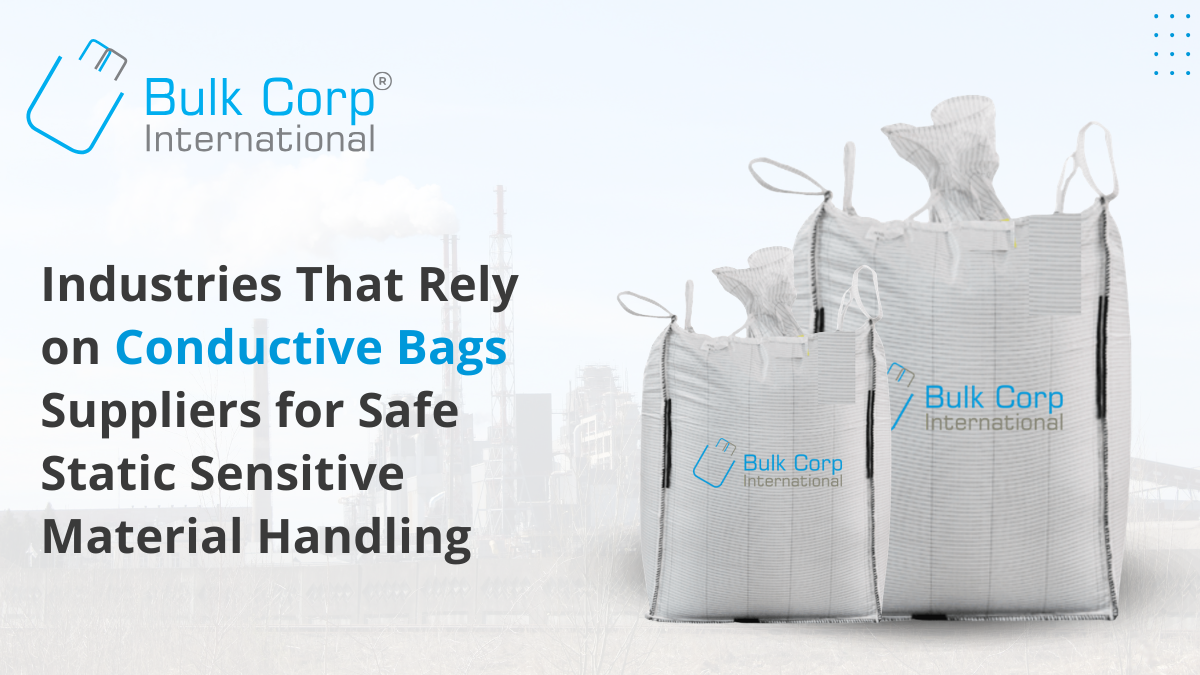
Conductive FIBC bags, commonly known as Type C bags, are designed specifically to control static electricity. These bags are manufactured using conductive yarns woven into the fabric. When the bag is properly grounded during use, it safely dissipates the static charge generated during filling and discharge.
This simple but critical function makes a major difference.
Instead of allowing static to accumulate, conductive bags redirect it safely to the ground. This reduces the risk of ignition and helps maintain a controlled environment, especially where dust or fine powders are involved.
A reliable conductive bags supplier ensures that these bags are not just produced, but engineered for real industrial conditions where consistency matters every day.
Why Static Control Is a Serious Concern?
Static electricity becomes dangerous when it interacts with the right environment. Most bulk handling operations naturally create friction. Materials move, shift, and flow continuously, generating charge as they do.
The risk increases when:
- Fine powders or dust are present
- The environment is enclosed or poorly ventilated
- Materials have flammable properties
- Handling processes involve continuous movement
These conditions are common across several industries. Without proper control, static discharge can interrupt operations, damage materials, and create safety hazards.
This is where working with an experienced conductive bags supplier becomes essential.
Industries That Reliably Use Type C Conductive Bags for Static Control
1. Chemical Industry
The chemical sector is one of the primary users of Type C conductive FIBC bags due to the presence of static-sensitive and potentially hazardous materials.
Type C bags are commonly used for:
- Fine chemicals
- Pigments and additives
- Resins and specialty powders
These materials can generate significant static during handling. When properly grounded, Type C bags safely dissipate electrostatic charge, reducing the risk of ignition during filling and discharge operations.
2. Petrochemical and Polymer Industry
In petrochemical and polymer processing environments, flammable vapours and static-generating materials are often present simultaneously.
Typical applications include:
- Plastic granules and polymer resins
- Petrochemical powders
- Oilfield chemicals and additives
Type C conductive bags are widely used in such facilities because they provide controlled static dissipation when grounded, helping maintain safer handling conditions.
3. Pharmaceutical Industry
Pharmaceutical manufacturing requires strict control over both contamination and electrostatic discharge.
Type C bags are used for handling:
- Active Pharmaceutical Ingredients (APIs)
- Fine powders and intermediates
These materials are often sensitive to static buildup, which can affect both safety and process integrity. Conductive FIBC bags support controlled environments where both compliance and product consistency are critical.
4. Mining and Mineral Processing
Mining operations frequently involve fine powders and dust-prone materials that can create hazardous conditions when static accumulates.
Common materials include:
- Sulphur
- Coal dust
- Metal powders
Type C bags are used in these environments to safely dissipate static charges, especially in confined or high volume operations where ignition risk is elevated.
5. Paints, Coatings, and Pigments
The paints and coatings industry handles materials that are both highly dispersible and, in some cases, associated with flammable environments.
Applications include:
- Dry pigments
- Powder coatings
During bulk handling, these materials can generate static electricity. Type C conductive bags help reduce the risk of electrostatic discharge when used in grounded systems.
6. Specialty Chemicals and High Risk Applications
Certain sectors involve materials that require a high level of electrostatic control due to their sensitive or reactive nature.
These include:
- Specialty chemical powders
- High sensitivity compounds
In such cases, Type C bags are selected as part of a broader safety system, ensuring that static charges are effectively managed during handling processes.
Why Type C Conductive Bags Are Preferred?
Not all bulk bags offer the same level of protection.
- Type A bags do not provide static control
- Type B bags reduce some risks but cannot safely dissipate charge.
- Type C bags are designed to safely discharge static when grounded
For industries where ignition risk is present, Type C conductive bags are a reliable solution because they actively manage static rather than just reducing it.
Choosing the Right Conductive Bags Supplier
The effectiveness of conductive bags depends on how they are designed, tested, and manufactured. This makes supplier selection a critical decision.
A reliable conductive bags supplier should offer:
- Certified manufacturing processes
- Experience across multiple industries
- Custom design options based on application
- Strict quality control and testing
- Consistent global supply capability
Bulk Corp International stands out by combining advanced manufacturing with strong industry experience. The focus remains on delivering packaging solutions that perform consistently in real working environments.
If you want to explore how these bags are structured and configured, reviewing the conductive bags product page can provide practical insights into available options.
Final Thoughts
Static electricity may seem like a minor issue, but in bulk handling environments, it carries real operational and safety risks. Industries dealing with powders, dust, and sensitive materials cannot afford to ignore it.
This is why conductive FIBC bags have become a widely adopted solution across multiple sectors. They provide a practical and proven method to manage electrostatic charge and support safer, more controlled handling processes when used correctly.
However, performance depends not just on the bag type, but on selecting the right specification for your material, process, and environment. This is where expert guidance becomes critical.
Bulkcorp International works closely with industries to deliver conductive FIBC solutions tailored to real handling conditions, backed by consistent quality control and application based engineering. Whether your requirement is chemical powders, petrochemical materials, or mineral handling, the right configuration can significantly improve safety and operational reliability.
If you are evaluating conductive bag requirements or looking to improve static safety in your bulk handling process, connect with Bulkcorp International to get a solution designed for your application, not just a standard product.
Choosing the right conductive bags supplier today can directly impact safety, efficiency, and long term operational stability.