


The Complete Guide to UN-Certified FIBC Bags for Safe Hazardous Material Handling
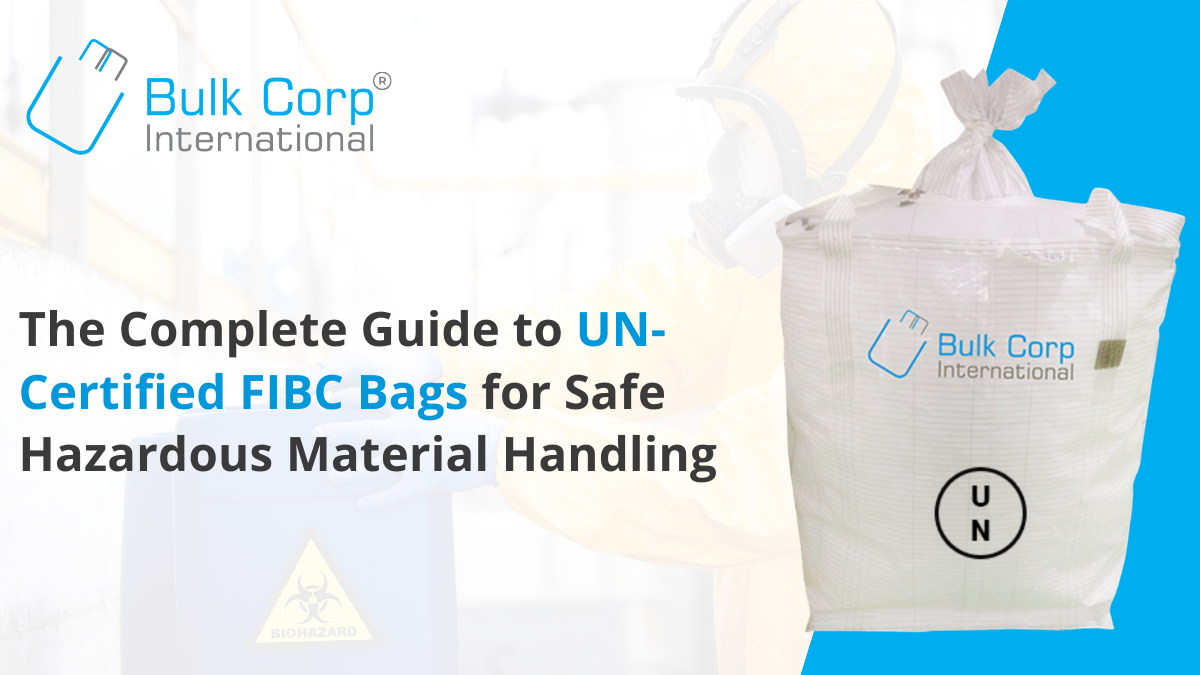
Handling hazardous materials requires more than standard packaging — it demands precision, safety compliance, and internationally approved containment solutions. Industries such as chemicals, agri-products, mining, and petrochemicals regularly transport substances that pose environmental and safety risks if improperly packed. This is where UN-Certified FIBC bags play a critical role.
Designed to meet strict United Nations regulations for dangerous goods transportation, these specialized bulk bags ensure materials are handled, stored, and shipped safely across global supply chains. Understanding how they work and why certification matters helps businesses minimize risks while maintaining regulatory compliance.
What are UN-Certified FIBC Bags?
UN-Certified FIBC bags are flexible intermediate bulk containers specifically tested and approved for transporting hazardous materials classified under international dangerous goods regulations.
Unlike standard bulk bags, UN-certified versions undergo rigorous testing to confirm their ability to safely contain hazardous substances under real-world handling conditions.
These bags are typically used for transporting:
- Chemical powders and granules
- Toxic or corrosive materials
- Industrial minerals
- Hazardous waste products
- Flammable or reactive substances
Certification ensures that the packaging meets global transport standards established by the United Nations Recommendations on the Transport of Dangerous Goods.
Why Certification Matters in Hazardous Material Handling?
When dealing with dangerous goods, packaging failure can result in environmental damage, financial loss, or serious safety hazards. Certification ensures that bulk packaging performs reliably even under stress.
Key Reasons Certification Is Essential
- Regulatory Compliance
International shipping regulations require certified packaging for hazardous materials. Non-compliant packaging may lead to shipment rejection or legal penalties.
- Safety Assurance
Testing verifies the bag’s ability to withstand lifting, stacking, and transportation impacts.
- Risk Reduction
Certified bags minimize leakage, rupture, and contamination risks.
- Global Acceptance
UN certification allows smooth cross-border transportation without compliance concerns.
Using UN-Certified FIBC bags ensures that safety is built into every stage of material handling.
Testing Standards for UN-Certified Bulk Bags
UN-certified bulk bags must meet strict international safety standards before they can be used for transporting hazardous or regulated materials. To ensure reliability during storage, handling, and transportation, these bags undergo a series of rigorous performance tests. Each test evaluates a different aspect of the bag’s strength, durability, and stability under real-world operating conditions.
1. Stacking Test
The stacking test determines whether bulk bags can safely support weight when stacked during storage or transportation. In this test, filled bags are stacked on top of one another for a specified period to simulate warehouse and shipping conditions. The test ensures that the bag maintains its structural integrity without collapsing or deforming under pressure.
2. Drop Test
The drop test evaluates how well the bulk bag withstands accidental drops that may occur during handling or loading. The filled bag is dropped from a predetermined height onto a hard surface. This test verifies that the bag remains intact and prevents leakage or rupture when subjected to sudden impact.
3. Topple Test
The topple test examines the stability of the bag when placed upright. The filled bag is intentionally tipped over to replicate situations where a bag might lose balance during handling or transportation. This test ensures that the bag remains structurally sound and that the contents remain secure even after a fall.
4. Tear Test
The tear test measures the resistance of the bag’s material to tearing or puncturing. During this evaluation, controlled force is applied to the fabric to determine how well it withstands stress and sharp pressure points. Strong tear resistance is essential for preventing damage when bags come into contact with rough surfaces or equipment.
5. Vibration Test
The vibration test simulates the movement and shaking experienced during long-distance transportation by road, rail, or sea. Filled bags are placed on a vibrating platform for a specified duration to replicate transport conditions. This test confirms that the bag maintains stability and prevents material loss during transit.
6. Righting Test
The righting test checks the ability of a bulk bag to be lifted and repositioned safely after it has fallen onto its side. The bag is placed in a toppled position and then lifted upright using its lifting loops. This test ensures that the bag can be handled safely without tearing, losing contents, or compromising structural integrity.
Only after successfully passing these evaluations can bags be labeled as UN-Certified FIBC bags.
Types of UN-Certified FIBC Bags
Different hazardous materials require different bag constructions. Common classifications include:
Type A
Suitable for non-flammable hazardous materials where static electricity is not a concern.
Type B
Offers limited static protection and prevents dangerous brush discharges.
Type C (Conductive Bags)
Designed to safely dissipate static electricity through grounding during use.
Type D (Static Dissipative Bags)
Provide electrostatic protection without grounding, ideal for sensitive environments.
Selecting the correct type depends on material properties and handling conditions.
Key Features of UN-Certified FIBC Bags
High-quality certified bags include several advanced safety features:
- Reinforced lifting loops for secure handling
- High-strength woven polypropylene fabric
- Anti-static protection options
- Leak-proof liner compatibility
- UV stabilization for outdoor storage
- Clearly marked certification labels
These features ensure safe containment even in demanding industrial environments.
Industries That Rely on UN-Certified Bulk Bags
Many sectors depend on certified packaging solutions to meet safety and compliance requirements.
· Chemical Industry
Used for transporting reactive or hazardous powders safely.
· Mining & Minerals
Handles materials classified as environmentally sensitive.
· Waste Management
Essential for handling hazardous waste and disposal materials.
· Petrochemical Sector
Supports safe logistics of flammable or combustible materials.
For these industries, UN-Certified FIBC bags are not optional — they are a necessity.
How to Choose the Right UN-Certified FIBC Bags?
Selecting the right bag involves evaluating operational and regulatory requirements carefully.
Consider the Following Factors:
- Hazard classification of the material
- Weight and density of contents
- Transportation method (road, rail, sea)
- Static electricity risk
- Storage environment conditions
- Required certification markings
Working with experienced manufacturers helps ensure proper bag selection aligned with compliance standards.
Best Practices for Safe Handling
Even certified packaging requires proper handling procedures to maintain safety.
- Never exceed the safe working load (SWL)
- Inspect bags before filling
- Use approved lifting equipment
- Avoid dragging bags across rough surfaces
- Store in dry, protected environments
Following correct handling guidelines maximizes the performance of UN-Certified FIBC bags and prevents accidents.
Advantages for Businesses
Investing in certified bulk packaging delivers long-term operational benefits:
- Improved workplace safety
- Reduced liability risks
- Regulatory compliance assurance
- Lower product loss during transit
- Enhanced customer confidence
Companies that adopt certified packaging solutions strengthen both safety culture and supply chain reliability.
Bottom Line
Transporting hazardous materials requires packaging solutions that prioritize safety, compliance, and durability. UN-Certified FIBC bags provide a trusted and internationally recognized solution designed to handle dangerous goods responsibly.
Through rigorous testing, advanced engineering, and strict certification standards, these bulk bags protect workers, products, and the environment throughout transportation and storage. As global regulations continue to tighten, adopting certified packaging solutions is essential for businesses aiming to operate safely and efficiently in modern industrial markets.
For reliable and globally compliant UN-Certified FIBC bags, businesses trust the expertise and manufacturing excellence of Bulk Corp International Ltd.